Unified user experience
Share navigation, terminology, identity, and permissions across the modules people use together.
 Get started
We design and build professional platforms that bring multiple capabilities into one connected system. From AI and data analytics to communication, automation, and business operations, each platform can be extended around evolving requirements.
A platform can combine business operations, communication, analytics, and AI without making users navigate unrelated products. We design the shared identity, data boundaries, and interaction model first, then connect the modules that the business needs. A coherent platform leaves room for future capabilities without requiring every feature at the first release.
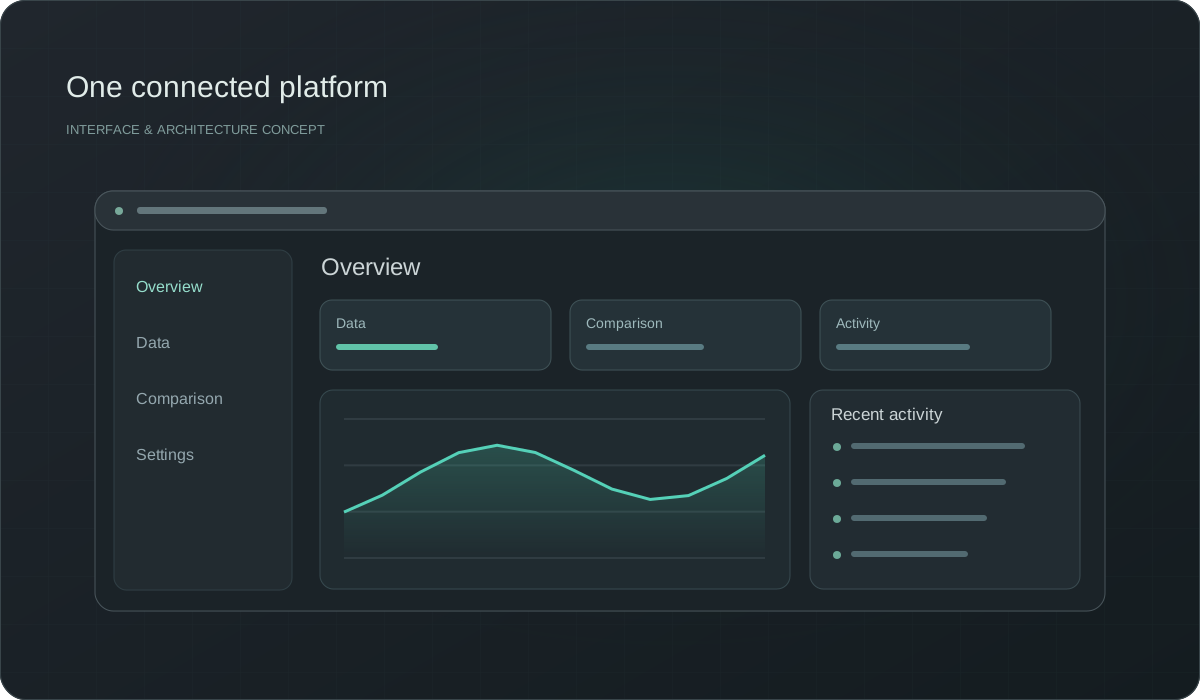
Share navigation, terminology, identity, and permissions across the modules people use together.
Link operational records, automation, and communication through explicit interfaces and shared identifiers.
Introduce assistance and insight where they support a workflow, with appropriate data access and human review.
Define module boundaries, events, APIs, and versioning so new capabilities can be added deliberately.
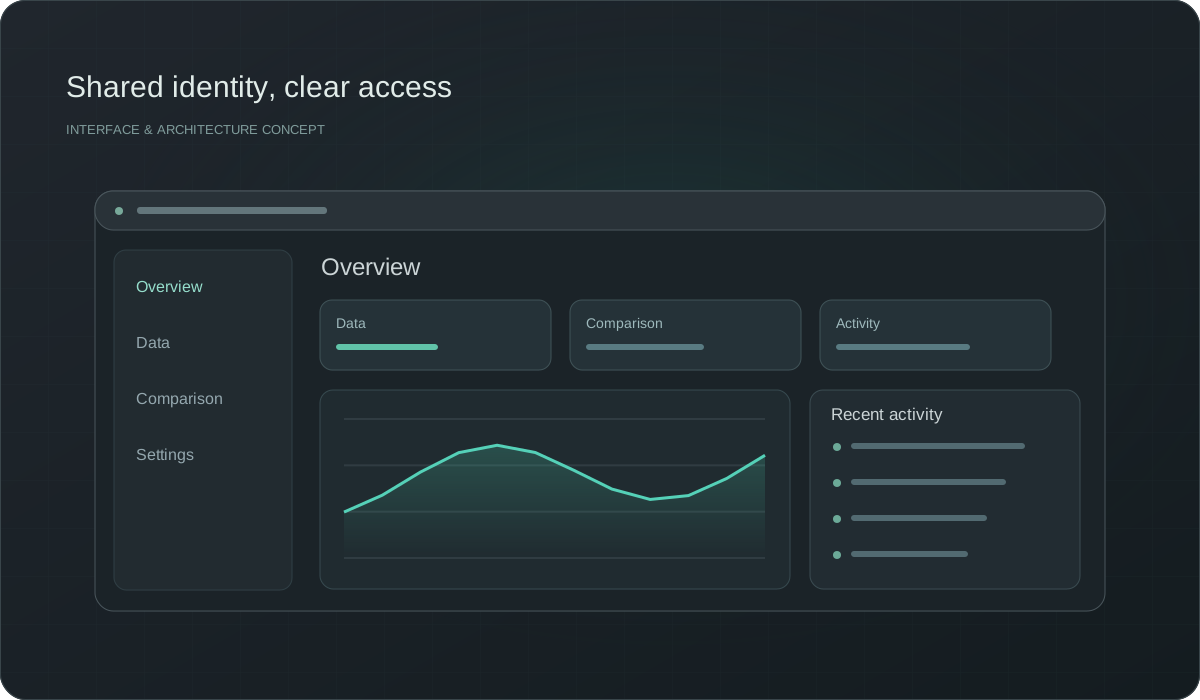
A platform should feel connected without making all data globally visible. We model user roles, organizations, module permissions, and shared records together. A hypothetical internal portal can give a user one entry point while preserving separate access to operations, conversations, and analytical views.
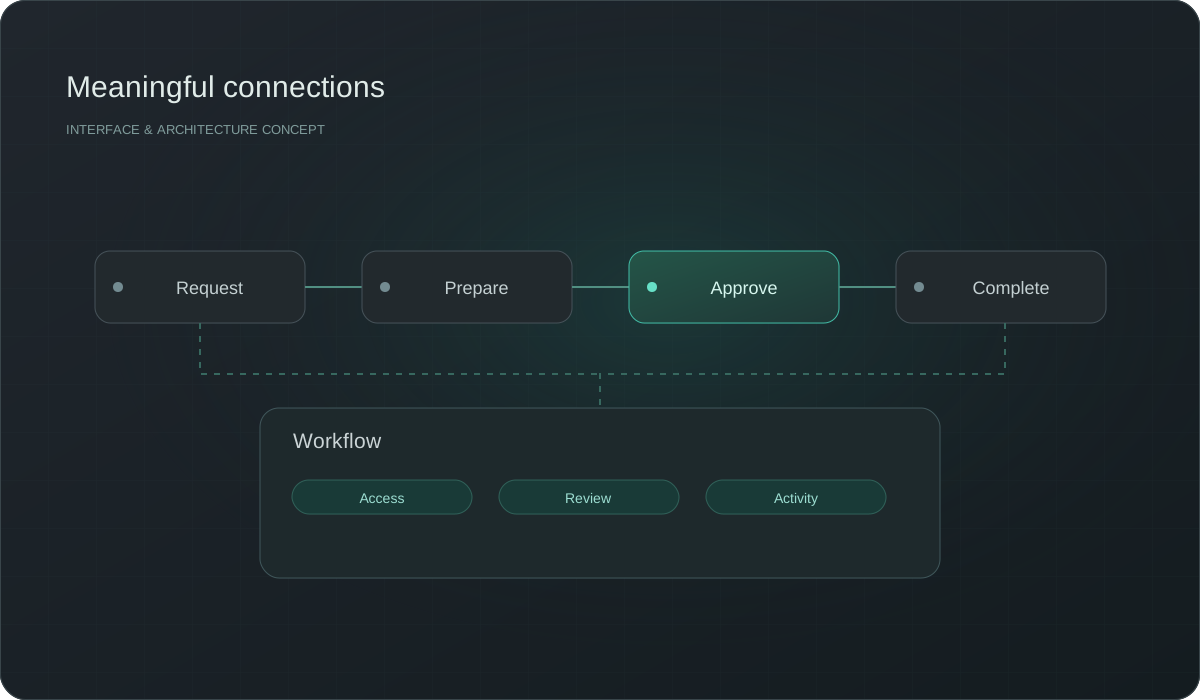
When an operational record changes, other modules may need to respond. We define the event, its ownership, delivery behavior, and recovery path. Communication, automation, and analytics can then use consistent context without every component depending directly on every other component.
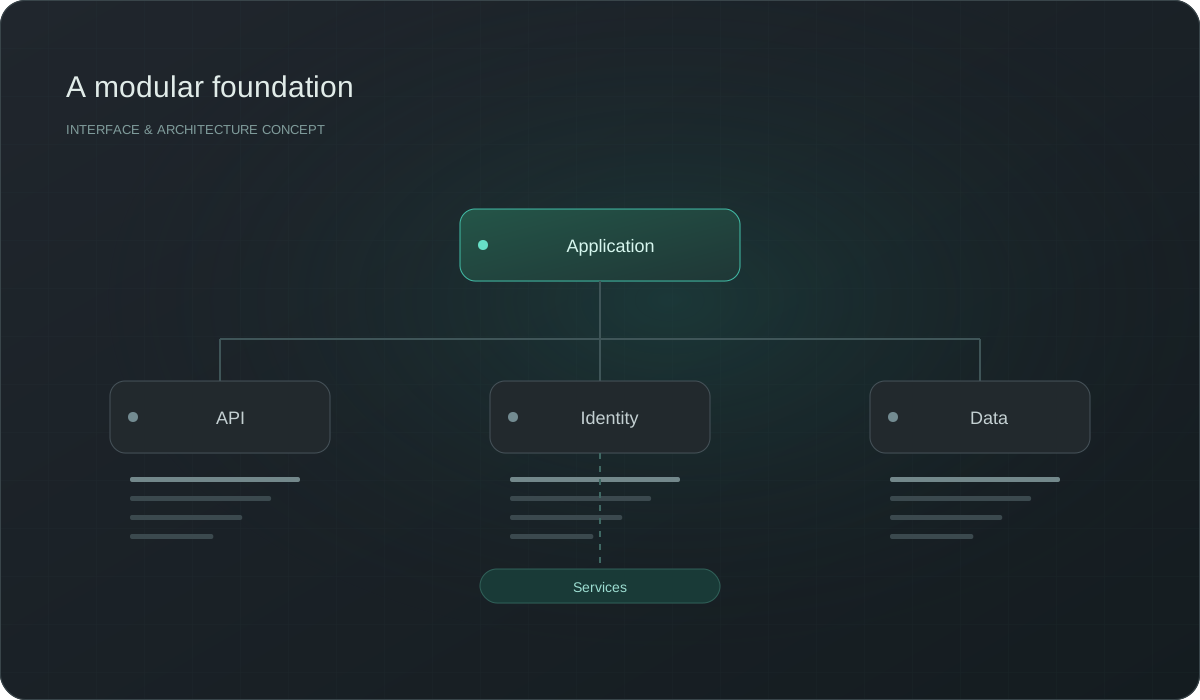
A modular roadmap keeps the first release focused and later changes understandable.
Map identities, records, workflows, and the capabilities that must work together.
Build an end-to-end journey across the necessary modules before adding more surface area.
Add capabilities through documented APIs, events, and permission rules.
Keep a record understandable across modules.
Introduce the capabilities needed for a useful journey.
Preserve clear interfaces as the platform grows.
No. We identify a useful connected workflow and the shared foundations it needs, then plan additional modules around evidence and priorities.
Yes, where suitable interfaces and permissions exist. We assess integration behavior and data ownership before deciding what should be shared.
Not automatically. A modular application or separate services can both be appropriate. Operating complexity and team capacity inform that choice.
A suitable data and API foundation can make later integration easier. The use case still needs evaluation, access controls, and an operating plan.
Have an idea, a question, or a challenge to solve? Tell us what you need, and we'll help you find the right starting point.
Tell us what you have in mind. You can reach our team directly by email.
We'll take time to understand your needs, discuss the possibilities, and work out what makes sense for your project.
Tell us about your idea, your challenge, or your next project. We’ll help you find the right way forward.