Mobile applications
Plan iOS and Android experiences around touch, platform navigation, permissions, and device capabilities.
 Get started
We develop applications for iOS, Android, Windows, macOS, and Linux. Each application is designed around its users, features, and target platforms.
A field tool, a desktop utility, and a consumer mobile app ask different things of a device. We design applications around those requirements, then choose a native or cross-platform approach. Interface behavior, local data, synchronization, and distribution are planned together rather than added after the screens are finished.
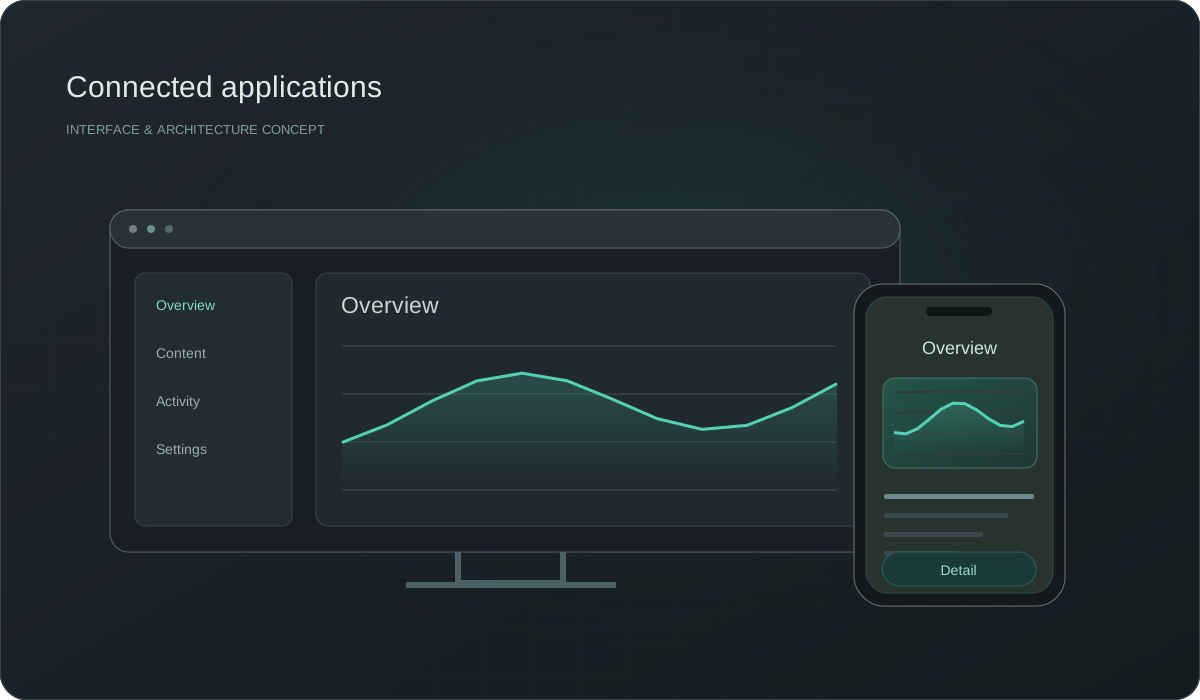
Plan iOS and Android experiences around touch, platform navigation, permissions, and device capabilities.
Build Windows, macOS, and Linux tools with workflows suited to larger screens, keyboard use, files, and system integration.
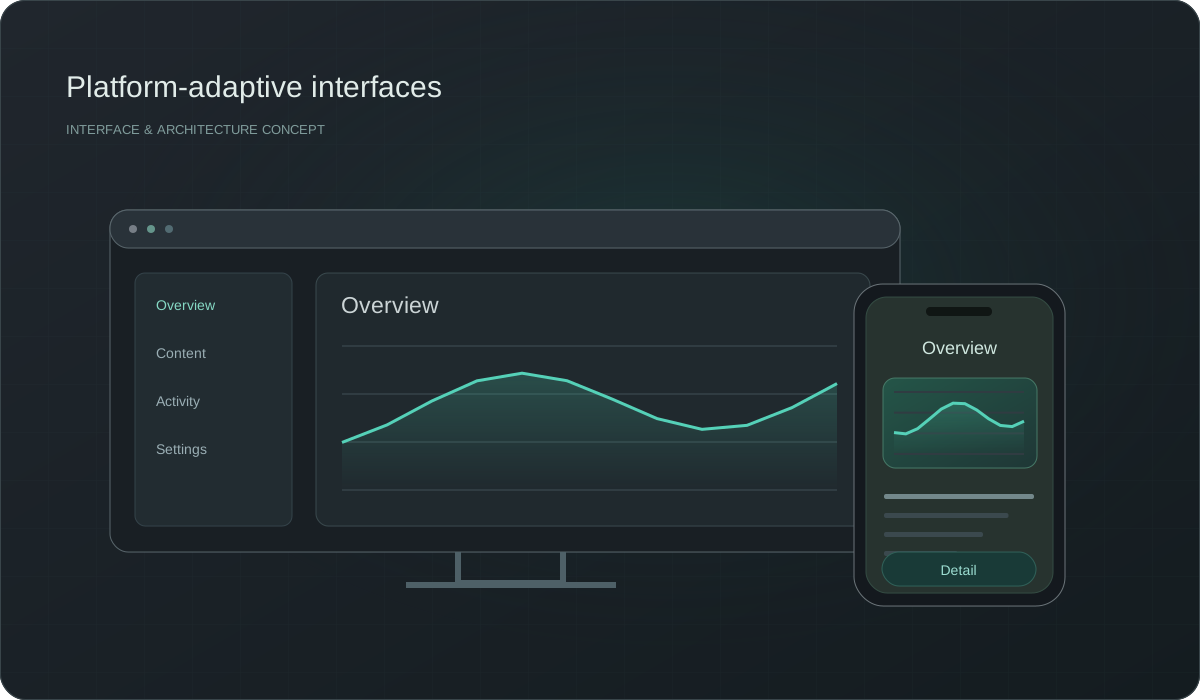
Share a product identity while respecting how each platform handles navigation, windows, inputs, and accessibility.
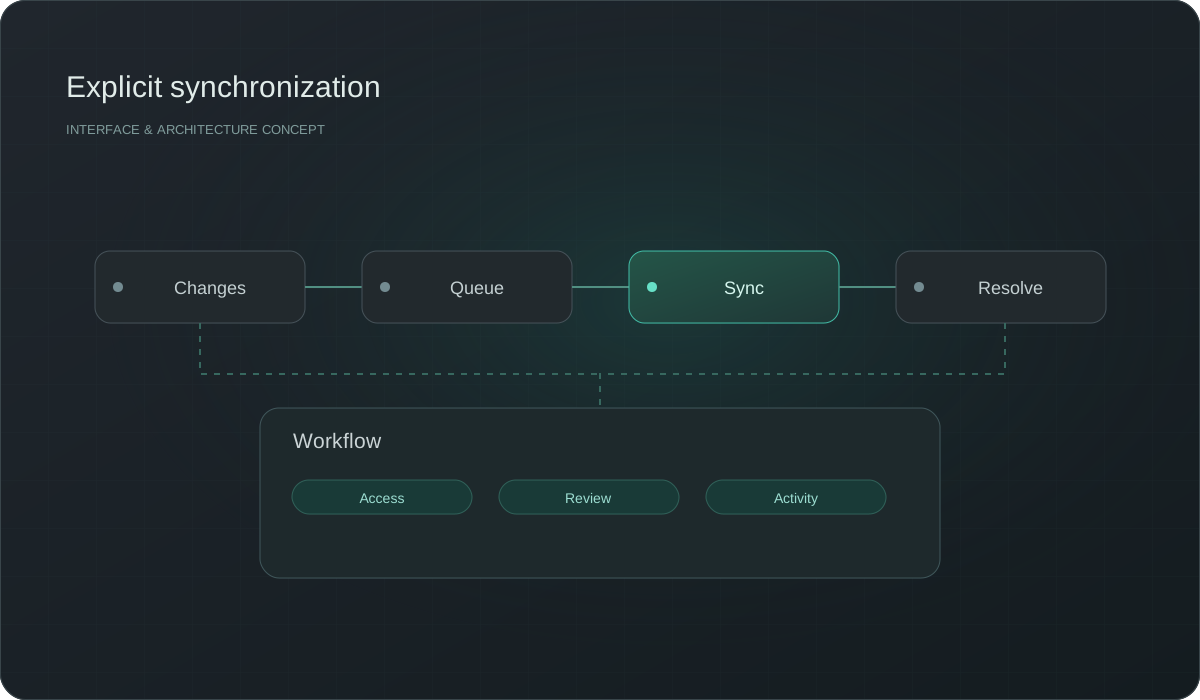
Define what can work without connectivity, where information is stored, and how changes are reconciled when a connection returns.
Connect accounts, business services, and device notifications with clear permission and background-execution behavior.
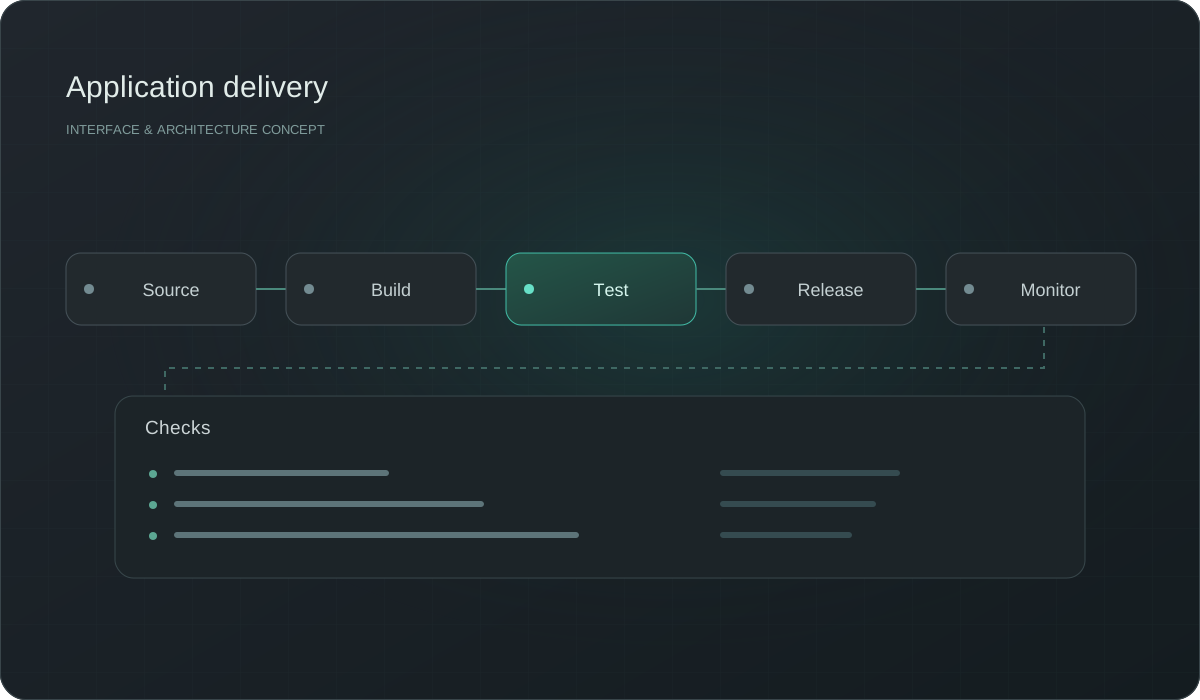
Check representative devices and release channels. Plan signing, packaging, store requirements, and ongoing version support.
Cross-platform frameworks can share useful parts of an application, but device features and platform rules still need individual attention. We compare native integration needs, performance constraints, team maintenance, and release plans before deciding how much code to share.
Offline behavior is a data-design decision. We identify which records are available locally, how long they remain valid, and what happens when two devices change the same information. Users need visible synchronization states and a recovery path when an operation cannot complete.
Real devices and release constraints inform the implementation from the beginning.
Identify target platforms, hardware features, data boundaries, and offline expectations.
Test a representative workflow with local storage, APIs, and platform-specific controls on real devices.
Prepare distribution, migration, updates, diagnostics, and ownership for future platform changes.
Match controls and workflows to how people use the device.
Make offline availability and synchronization understandable.
Plan ongoing updates alongside the first version.
Sometimes significant code can be shared, but platform integrations, UI behavior, and distribution still differ. We evaluate the compromises for the particular application.
Where suitable, yes. We define the offline feature set, local storage, data validity, and synchronization conflicts before implementation.
We can prepare packaging and the technical release workflow. Store accounts, platform review, signing, and organization-specific distribution requirements are agreed during planning.
Applications need dependency updates, platform compatibility checks, issue investigation, and new versions. Maintenance scope and ownership are agreed around the product’s needs.
Have an idea, a question, or a challenge to solve? Tell us what you need, and we'll help you find the right starting point.
Tell us what you have in mind. You can reach our team directly by email.
We'll take time to understand your needs, discuss the possibilities, and work out what makes sense for your project.
Tell us about your idea, your challenge, or your next project. We’ll help you find the right way forward.