Network architecture
Plan segmentation, secure connectivity, and access boundaries for offices, servers, and remote users. Document how traffic is allowed to move.
 Get started
We design secure networks, core software infrastructure, and internal or shared platforms. We connect existing systems so they work together reliably.
Networks, servers, identity, and software interfaces form one operating environment. We design them around the systems your organization already uses, the information it needs to protect, and the people who will run it. A dependable foundation includes ownership, documentation, and recovery as well as deployment.
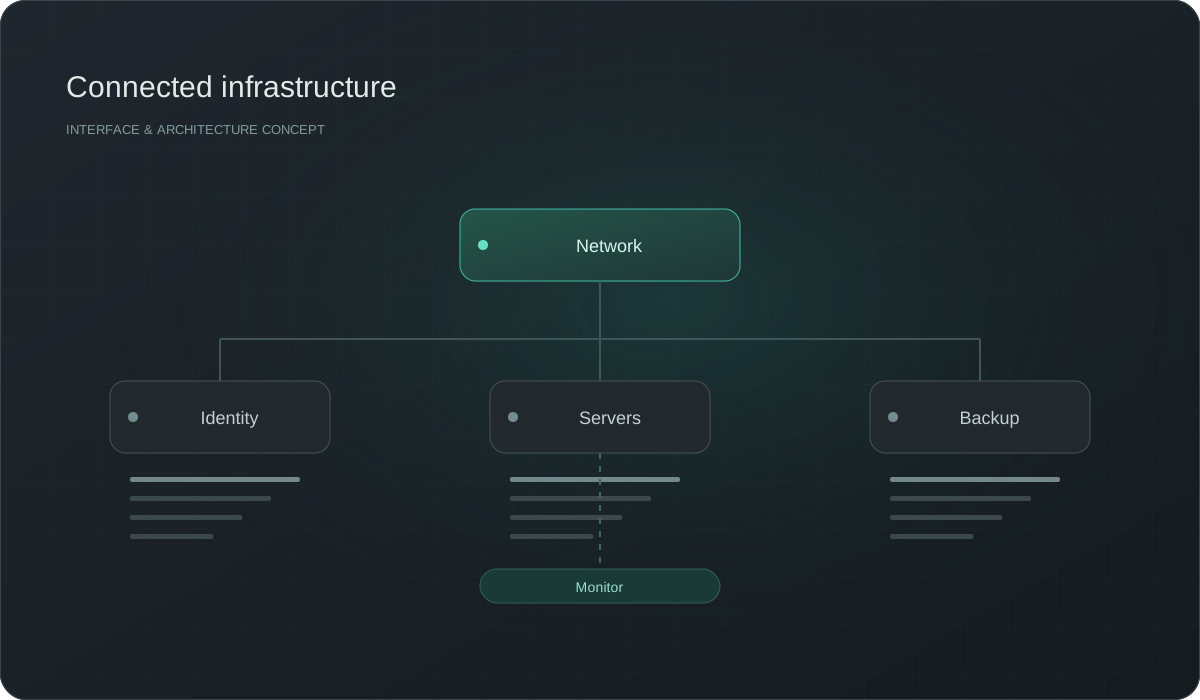
Plan segmentation, secure connectivity, and access boundaries for offices, servers, and remote users. Document how traffic is allowed to move.
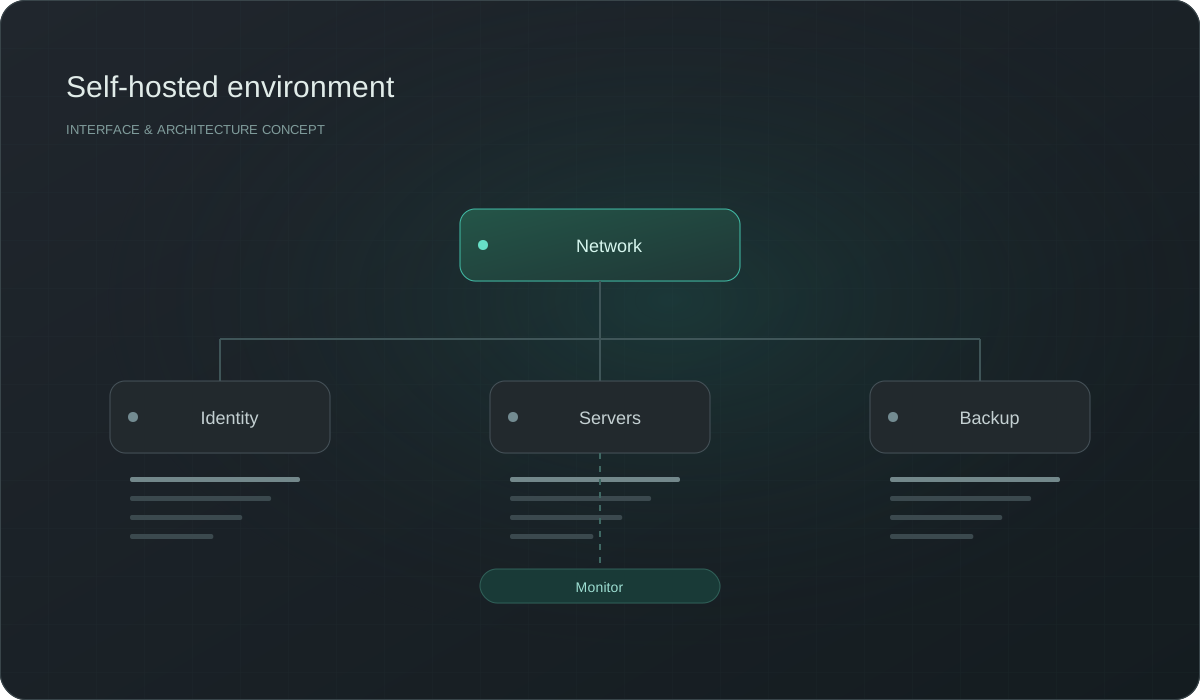
Provision on-premises or self-hosted environments with configuration, updates, capacity planning, and operational responsibility in view.
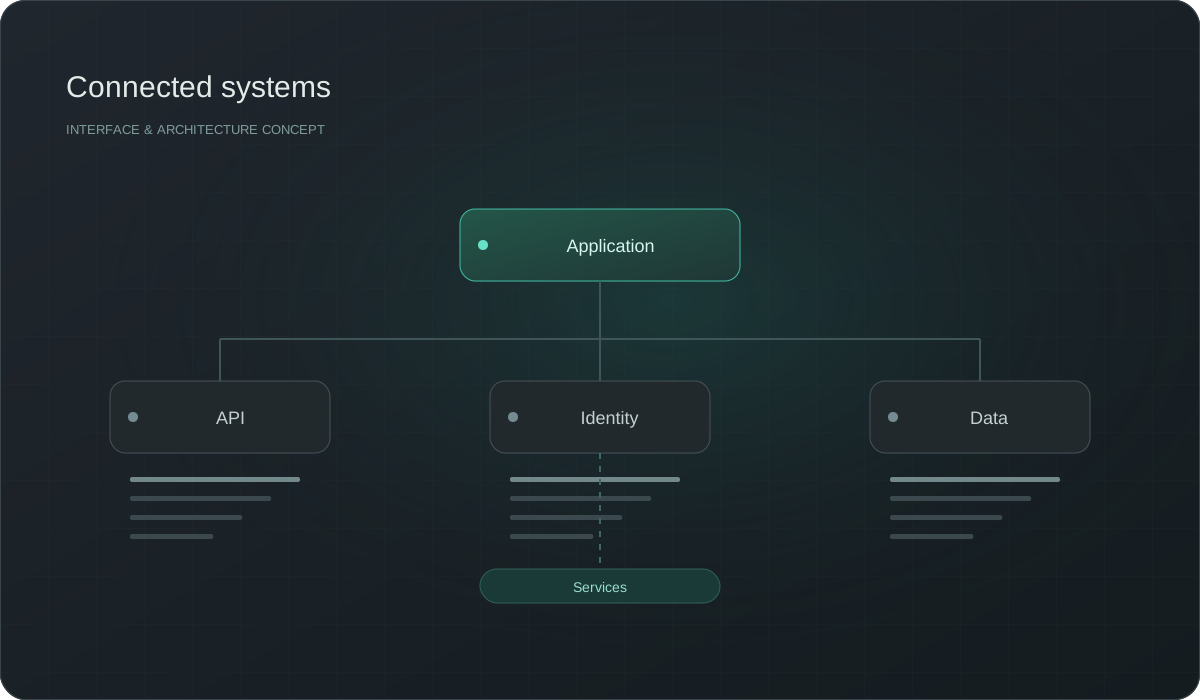
Design contracts between existing applications, databases, and external services. Handle authentication, retries, versioning, and inconsistent responses.
Connect authentication with the roles and boundaries that matter in the organization. Keep service access separate from individual user accounts.
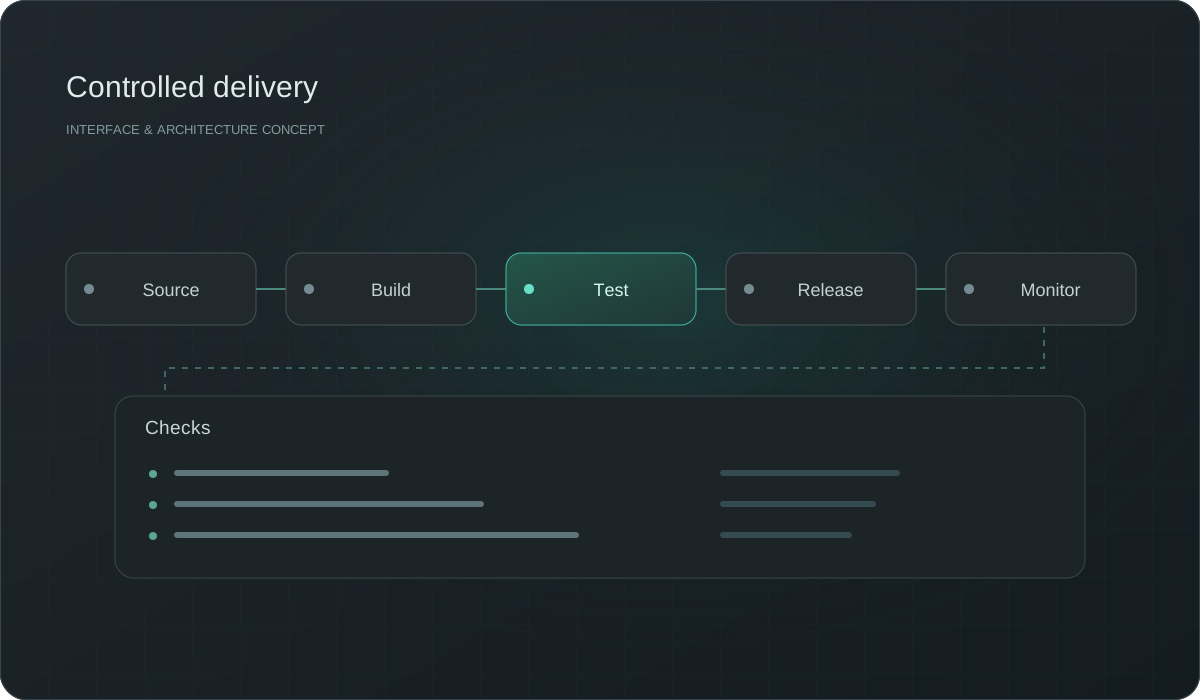
Build CI/CD and shared engineering infrastructure that makes environments reproducible. Provide clear deployment and rollback paths.
Collect meaningful logs, metrics, and alerts. Plan backups, restoration exercises, and maintenance around the actual service dependencies.
Replacing every system is rarely a prerequisite for better operations. We map existing interfaces and define a gradual integration path. Data contracts, event handling, and access controls make the connections understandable to the teams that maintain them.
Self-hosting provides control but also creates responsibilities for updates, capacity, and recovery. We document those responsibilities and evaluate dependencies openly. The architecture can use internal and external services according to your requirements without promising freedom from every third-party dependency.
The implementation follows the dependency map, not a list of disconnected tools.
Map systems, network routes, owners, access, and recovery needs before proposing changes.
Provision repeatable environments and test integration failures, permissions, and rollback before wider rollout.
Provide configuration history, monitoring, runbooks, and backup checks with clear maintenance ownership.
Understand which systems and people are affected by a change.
Reduce reliance on undocumented manual setup.
Turn backup assumptions into restoration procedures that can be checked.
We assess their capacity, operating systems, connectivity, and maintenance condition. The plan may reuse, improve, or replace selected components according to the workload.
No. On-premises, hosted, and hybrid environments have different costs and responsibilities. We choose according to data handling, availability needs, and operational capacity.
We document API contracts, ownership, versions, and failure handling. Monitoring and integration tests help identify a change at one end before it becomes a hidden failure elsewhere.
Support scope, coverage, and responsibilities are agreed separately. We do not assume a service level or response time without reviewing the actual operating requirements.
Have an idea, a question, or a challenge to solve? Tell us what you need, and we'll help you find the right starting point.
Tell us what you have in mind. You can reach our team directly by email.
We'll take time to understand your needs, discuss the possibilities, and work out what makes sense for your project.
Tell us about your idea, your challenge, or your next project. We’ll help you find the right way forward.