Business reporting
Define useful measures, reporting periods, segments, and ownership so different teams can interpret the same result consistently.
 Get started
We develop analytical tools and systems that turn data into useful information for decision-making. Whether working with everyday business records or large datasets, we build solutions for reporting, exploration, pattern discovery, and analysis.
Teams need more than a collection of charts to make a decision. They need clear definitions, relevant comparisons, and confidence about where the information came from. We build analytical workflows for ordinary business records as well as larger datasets, with reporting and exploration designed around the people who will interpret the results.
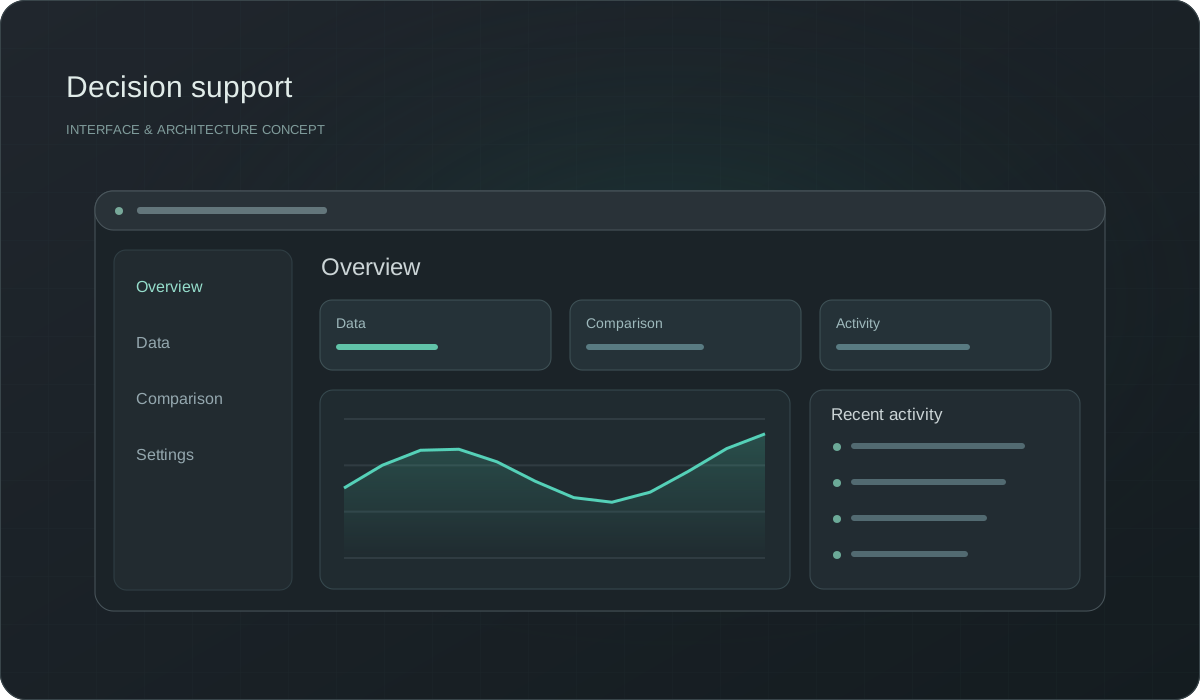
Define useful measures, reporting periods, segments, and ownership so different teams can interpret the same result consistently.
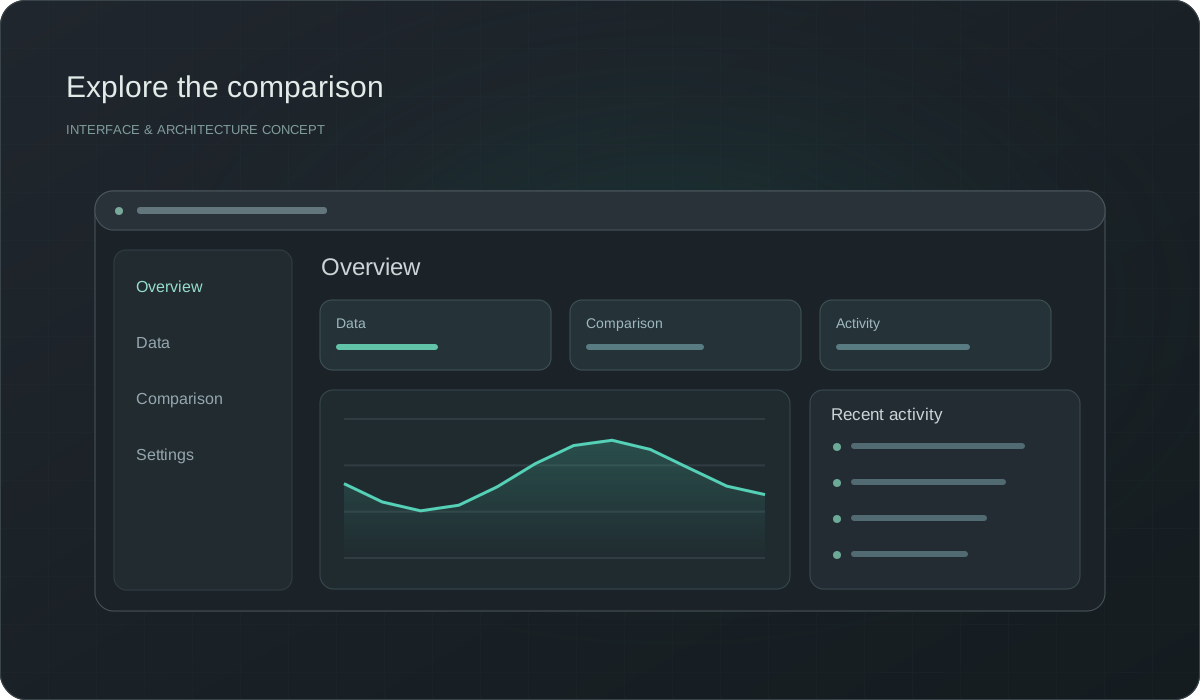
Provide comparisons, filters, and drill-down paths that connect a summary to the records behind it.
Investigate distributions, patterns, outliers, and uncertainty without treating correlation as proof of causation.
Connect analytical findings to review, scenario comparison, and the next business action with a visible human decision point.
A hypothetical operations dashboard can show different answers when teams count the same event differently. We document definitions, exclusions, time boundaries, and data freshness before building the visualization. Reconciliation with source records helps make a report explainable when someone questions a result.
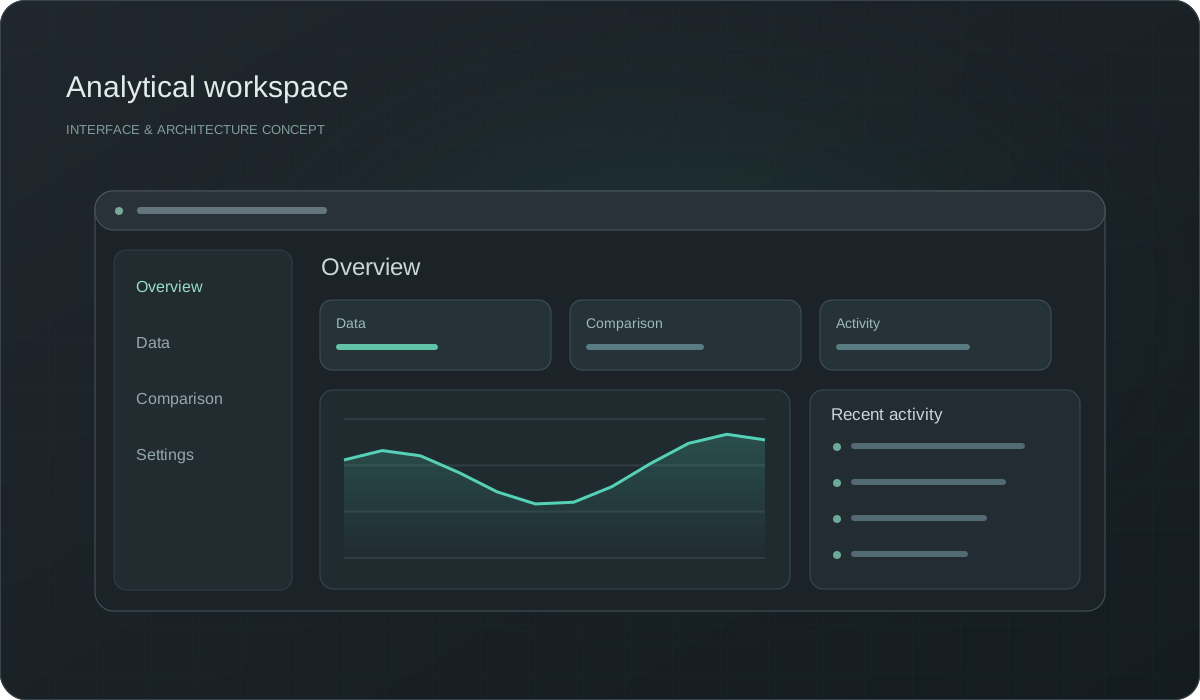
A useful analytical interface lets people ask the next question: which segment changed, whether an outlier is real, or what data is missing. We choose charts and interaction according to those questions and make uncertainty visible. The focus is understanding and decision support, even when the dataset is small.
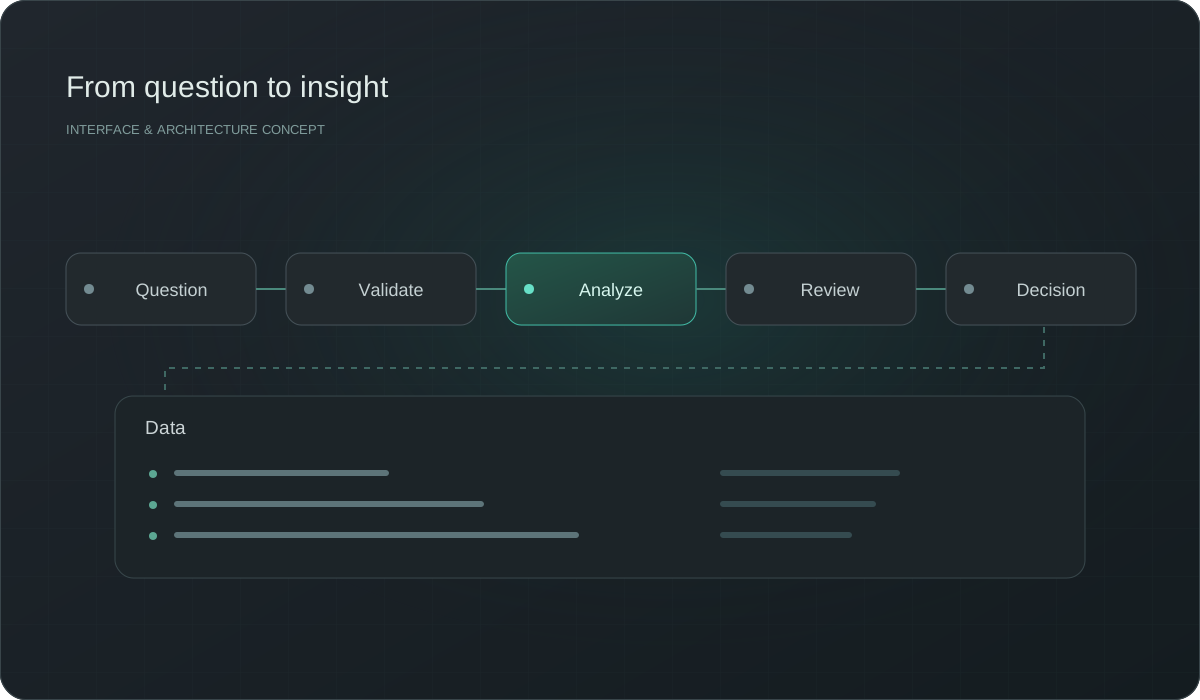
The business question remains the reference point from data preparation to delivery.
Identify the decision, audience, measures, and available source records.
Check quality, explore patterns, and test interpretations with domain experts.
Release reports with definitions, ownership, and a process for updating the analysis.
Keep measures and periods consistent across reports.
Let exploration reveal what should be investigated next.
Explain quality limits alongside the findings.
No. Well-defined business records can support useful analysis. The first questions are whether the data is relevant, understandable, and sufficiently reliable.
They can expose patterns and comparisons, but an explanation needs context and investigation. We avoid presenting a visual correlation as a confirmed cause.
We assess quality, agree on cleaning rules, and show remaining gaps. Some decisions may need better collection before the analysis is useful.
Yes. Access can follow roles, teams, or record ownership, with filtering applied before information reaches the analytical interface.
Have an idea, a question, or a challenge to solve? Tell us what you need, and we'll help you find the right starting point.
Tell us what you have in mind. You can reach our team directly by email.
We'll take time to understand your needs, discuss the possibilities, and work out what makes sense for your project.
Tell us about your idea, your challenge, or your next project. We’ll help you find the right way forward.