Internal knowledge assistants
Help staff locate policies, instructions, and technical information through permission-aware retrieval and visible source references.
 Get started
We develop and integrate AI for a wide range of business needs, from local and offline models to cloud-based AI services. Our work includes intelligent agents, RAG systems, model training, fine-tuning, and specialized AI applications. We also adapt and optimize AI systems for the hardware and infrastructure available to each business.
A team may have the answer somewhere in its documents but still struggle to find it at the right moment. Intelligent systems can connect that knowledge to everyday work: an internal assistant, a specialized review tool, or an agent that prepares an action for approval. We begin with the business decision and the limits on data use.
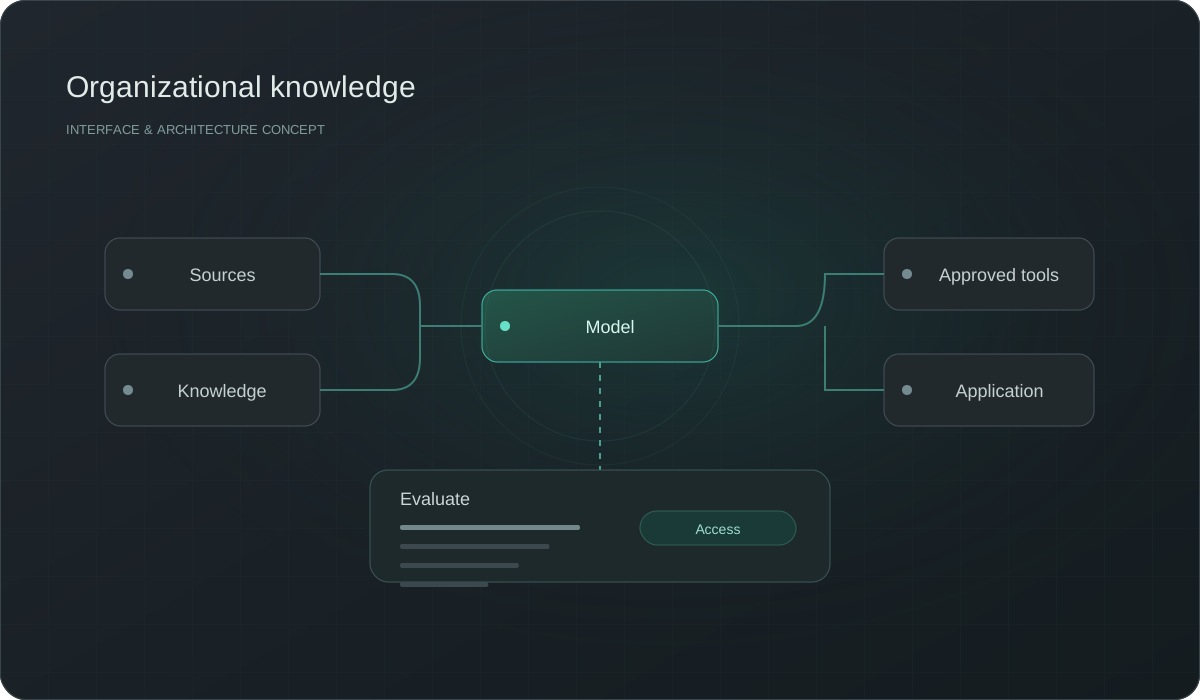
Help staff locate policies, instructions, and technical information through permission-aware retrieval and visible source references.
Support classification, document review, or domain-specific assistance with examples and evaluation criteria defined by the business.
Prepare records, gather information, and call approved tools. Keep human responsibility explicit when an action changes business data.
Choose local, offline, online, or mixed operation according to confidentiality, connectivity, hardware, and maintenance needs.
An organizational assistant should respect who can see each document and how current it is. RAG provides a route from approved knowledge to a response, but source quality and retrieval evaluation still matter. A hypothetical policy assistant should point to the relevant instruction rather than manufacture a new company rule.
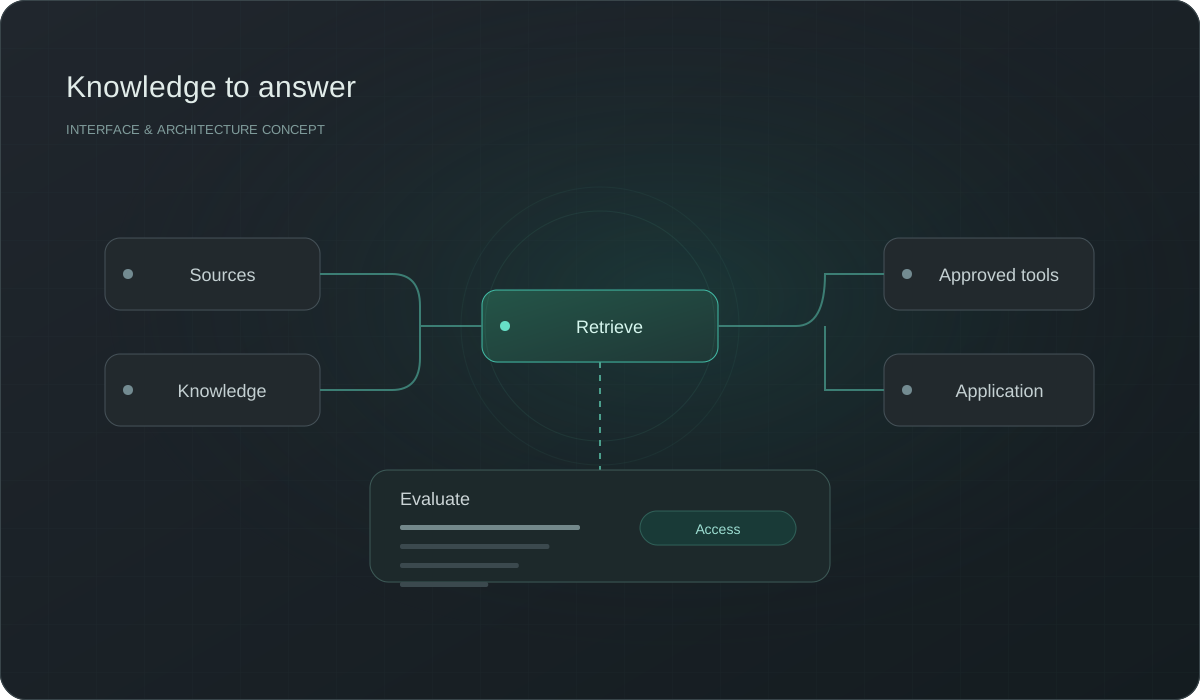
A larger model is not automatically a better business fit. We consider language, domain accuracy, available memory and accelerators, operating cost, and data boundaries. Deploying an existing model, fine-tuning it, or training a new one require different evidence, datasets, and infrastructure.
Start with a bounded use case and expand only when the evidence supports it.
Identify the person, decision, information sources, and cost of an incorrect result.
Compare candidate approaches on representative inputs, including cases where the system should decline or ask for review.
Connect approved software interfaces, assign ownership, and plan monitoring, knowledge updates, and model changes.
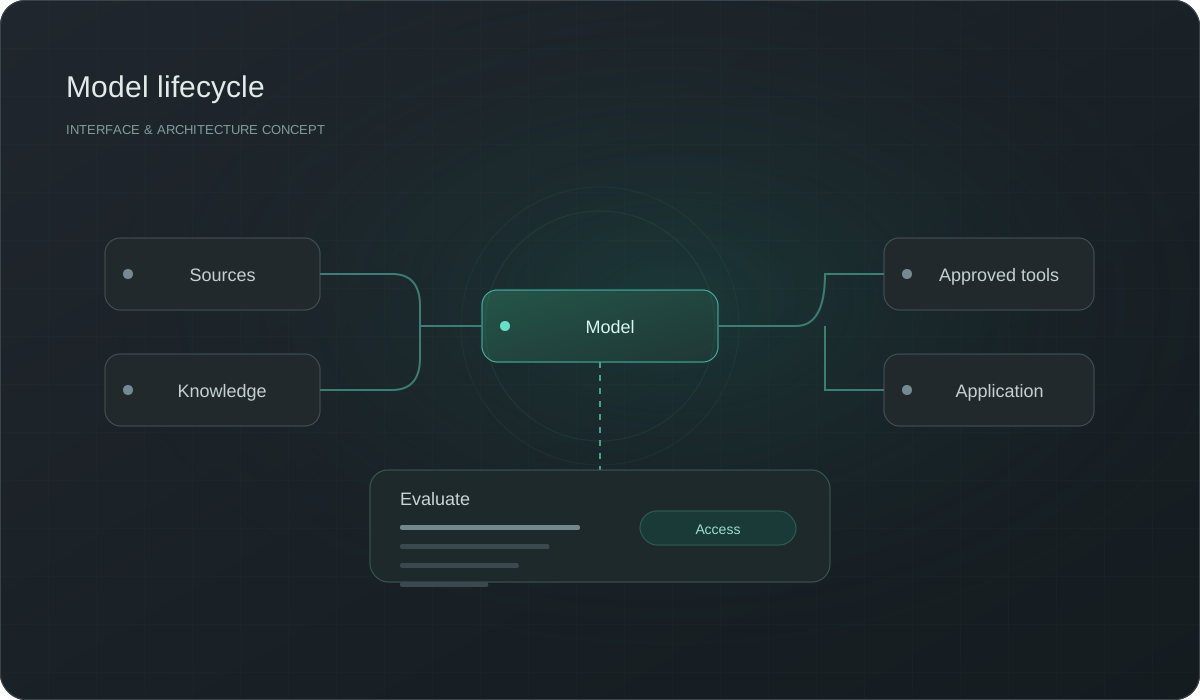
Connect answers to the organizational sources behind them.
Use approved automation while preserving review boundaries.
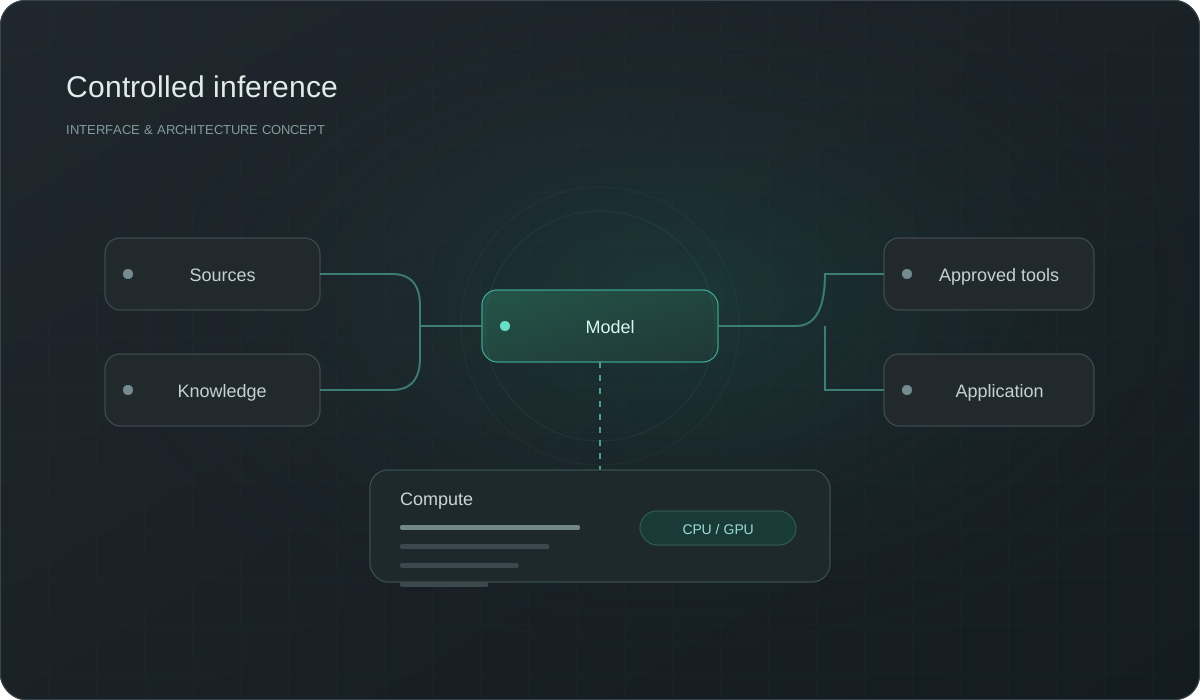
Match capability to hardware, privacy, and ownership.
Choose a repeated task with accessible information, a clear owner, and a result that can be evaluated. A bounded pilot reveals more than an undefined assistant for every task.
A local or controlled deployment may support that requirement. We assess models, licenses, tools, storage, logging, and hardware before confirming the architecture.
No. Retrieval, workflow design, and an existing model may be sufficient. Fine-tuning needs a specific objective, suitable examples, and an evaluation plan.
Only within an explicitly designed scope. Sensitive or consequential actions can require human approval, limited permissions, and recorded execution.
Have an idea, a question, or a challenge to solve? Tell us what you need, and we'll help you find the right starting point.
Tell us what you have in mind. You can reach our team directly by email.
We'll take time to understand your needs, discuss the possibilities, and work out what makes sense for your project.
Tell us about your idea, your challenge, or your next project. We’ll help you find the right way forward.